Neptune Papers: Family Tree Harvest
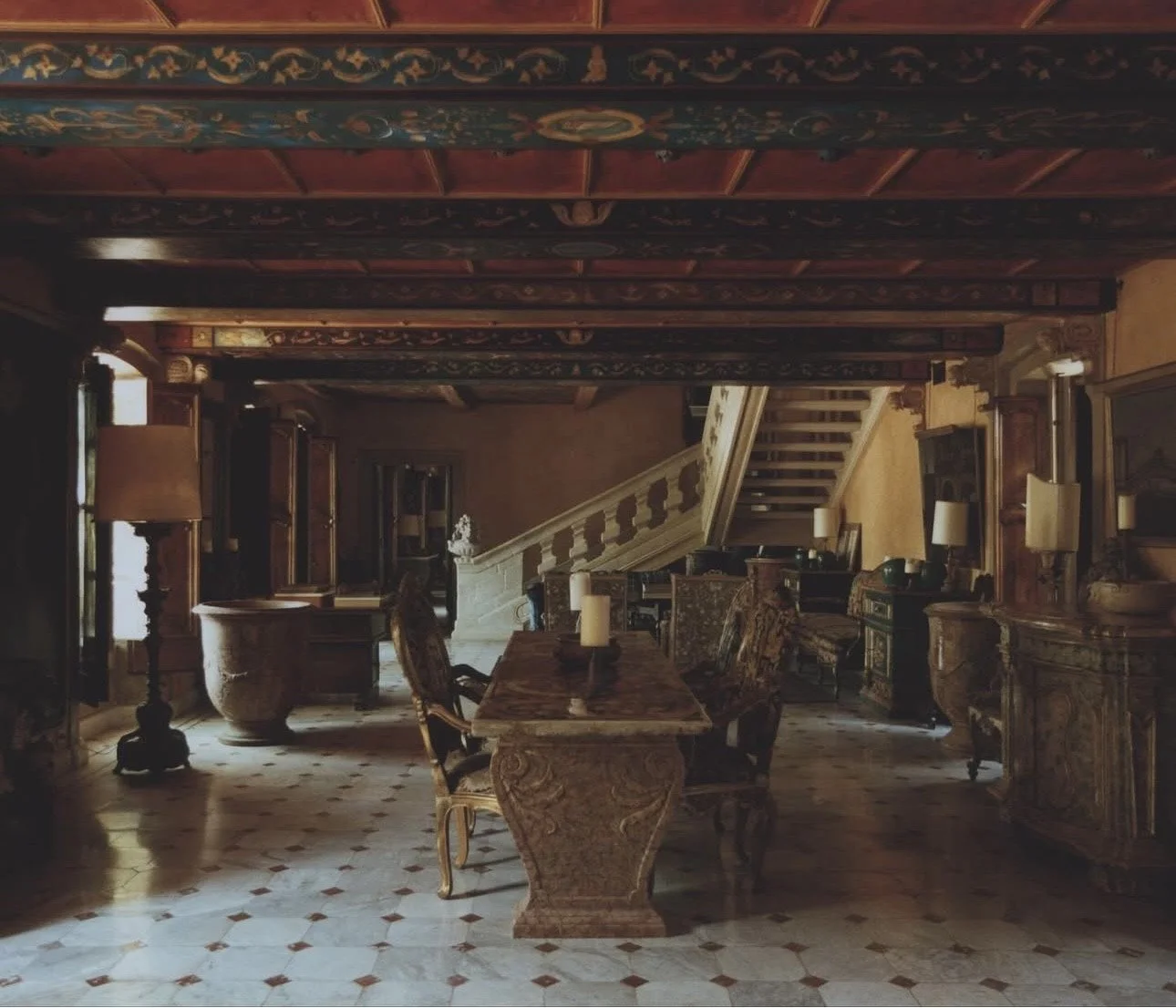
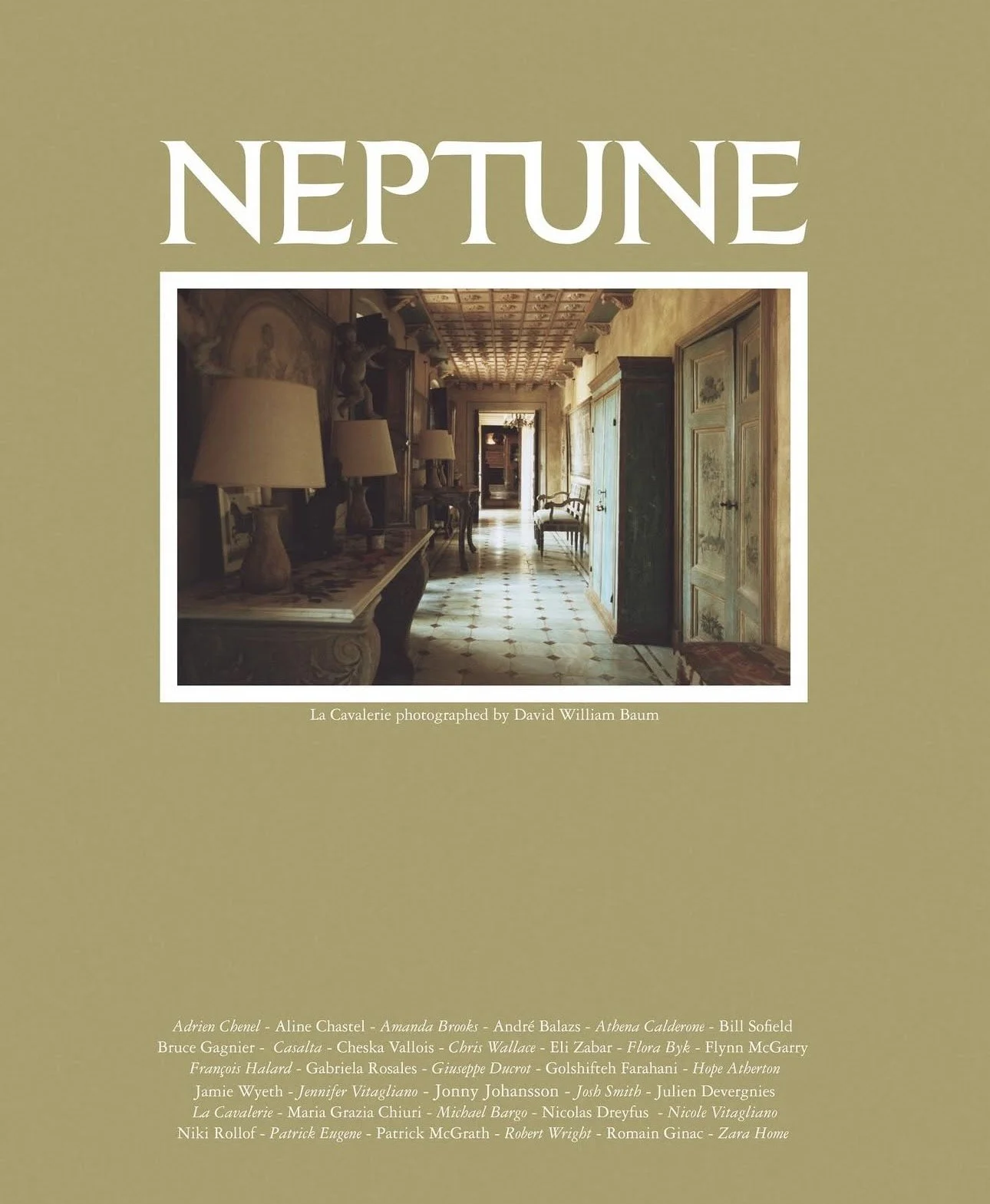
All images by David William Baum
A tour of La Cavalerie - the beloved home of designer Emmanuel Ungaro finds a new lease of life under his daughter, Cosima
Cosima Ungaro was seven years old when her father, the couturier, Emanuel took her to her first fashion show: “In those days, my mother would be working backstage and my dad would come out for the finale with a model wearing a wedding dress,” She reminisces. “I remember being very confused when I saw my dad walk out with someone wearing a wedding dress who was not my mother! I looked around and said, “But he’s already married!”
Such was the glamorous life of Emanuel who was born to humble beginnings in a family of tailors who fled the Fascist regime in Italy for Aix-en-Provence in Southern France in the 1920s; and would ascend to become one of the defining designers of his generation before his death in 2019, aged 86. After learning his craft under the tutelage of Cristóbal Balenciaga and André Courrèges, he set up his own label in 1965 where he would go on to dress the likes of Jacqueline Kennedy, Deeda Blair, Gena Rowlands, Anouk Aimée and Catherine Deneuve in his signature blend of romantic prints and sensual dresses before selling his brand in 2005 and retiring from fashion.
But he never forgot his Provençal roots. For years he had been searching for a country retreat from Paris, somewhere between Aix-en-Provence and Tuscany when he came upon La Cavalerie, a 65-hectare estate with its own organic olive grove in the foothills of Provence’s Luberon mountains; about an hour’s drive from Aix-en-Provence. The property which dates back to the 12th century had been through numerous incarnations: starting off as a Commanderie for the Knights Templar (the Roman Catholic military order) in 1176, complete with its own chapel to conversion to a monastery in the 18th century and an orphanage thereafter. The estate had been abandoned and in a state of disrepair when Emanuel purchased it in 1986. Over the next half-decade, he proceeded to restore the property working with local stonemasons, landscape gardeners, painters and architects to transform it into his own private “Maison de Liberté” that he and his family would escape to every summer. “This place changed my father,” recalls Cosima. “I saw how different my father was here compared to when he was in Paris. He was in a better mood and I would see him enjoying the simple pleasures in life. He would commune with the place. I would often find him walking the terrace at night, enjoying the moon.”
On a warm August day, I am sat under the shade of a large white patio umbrella on the terracotta terrace of La Commanderie enjoying a light aperitivo of tomato bruschetta and radishes served with smoked cod’s roe with Cosima and her American husband, Austin Feilders. There’s a fresh scent of lavender and thyme in the air and a faint constant hum of cicadas occasionally punctuated by mischievous bouts of laughter emanating from their three children playing nearby. The couple met at McGill University in Canada: Austin was an art history major while Cosima studied political science before becoming a journalist. Shortly after they married in 2019, they formed their own creative consultancy, Concept Paris working with clients like Bottega Veneta and Zara. Despite no formal training in interior design, one of their first projects was a renovation of a three-storey flat in Paris’ Left Bank for Cosima’s mother, Laura, realized in collaboration with the architects Alessandro Scotto and Yann Le Coadic. Creatively invigorated by that effort, the couple soon set their sights on a much bigger project: the transformation of La Cavalerie from a beloved family residence into a ten-room private retreat, available for short term stays.
The catalyst for this decision was a particularly tumultuous period in their family’s life: in March 2020, only a few short months after Emanuel’s death, Austin and a newly pregnant Cosima packed up their belongings from their Paris flat and decamped to La Cavalerie where they stayed for the next six months to wait out the worst of the pandemic. “Being here during Covid saved our lives,” states Cosima. “I remember driving here and having this feeling of solace which made me think this is something worth fighting for.” Experiencing loss and birth in a short period of time was an impactful experience for her, “It made me think of the future not just from my perspective but the perspective of future generations.” Seeing the seasons pass from the light frost of early Spring to glorious summer and a crisp Fall convinced her it could be much more than just a summer residence. “Being here allowed me to understand it could go from holiday place to life project,” she says. “We want the house to live all year long and keep pulsing.”
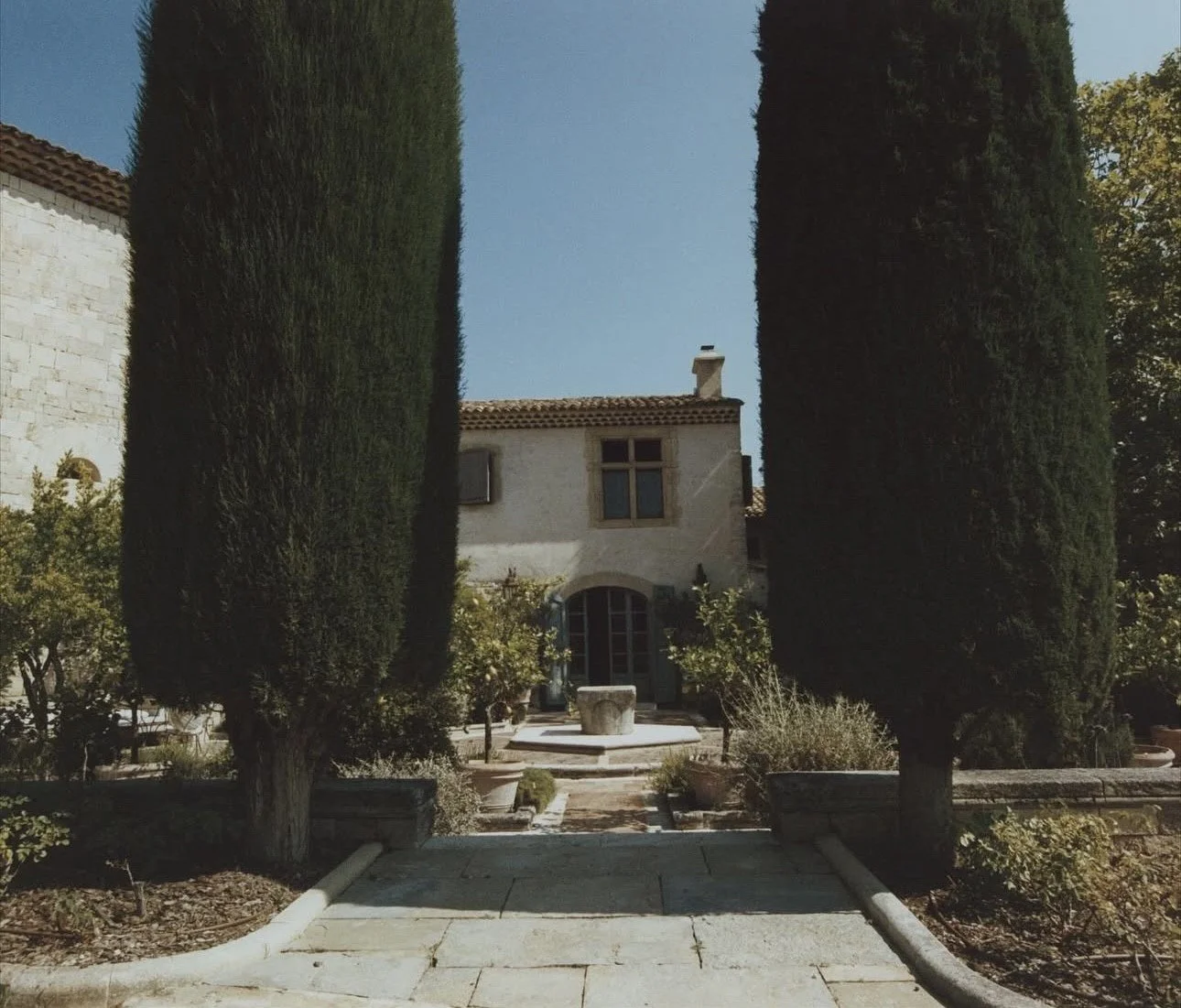
After a lunch of roasted eggplant with tahini and chicken cacciatora prepared by the resident chef Lyn Mougeolle, the couple take me on a tour of the grounds. A line of majestic flat topped cypress trees leads to a circular clearing where an ancient fountain takes pride of place, surrounded by potted lemon trees. There is an informal wildness to the gardens where landscape designer Arnaud Casaus has planted drought-tolerant plants that thrive in the Provençal sun: cacti, delicate gauras, blue-silver pines, tall grasses, Pistachio bushes, and fig trees. At the end of the property’s main axis, a driveway lined with gigantic Greek urns and centuries-old lime trees leads to a 12th century chapel that took Emmanuel five years to restore and where he would later get married to his wife, Laura. Built out of ancient stone and decorated austerely with terracotta vessels placed on plinths – the chapel has in recent times, played host to piano and acoustic recitals and meditation sessions.
But it’s the 800-year-old La Commanderie – the elegant 10,000 square foot, three story manor house that is the heart of the estate where Emanuel’s expert sense of curation can be found: effortlessly melding his Italian influences with the house’s medieval French architecture. In a 2005 interview with the Financial Times, he told how he “sought to recreate precise memories of Italy from the façade of the main piazza in Pienza to the windows in Mantova that inspired me to wax the cement borders of all [the] windows until they acquired the patina of pietra serena.” Upstairs are six grand bedrooms complete with en-suite bathrooms, each decorated in its own idiosyncratic style – whether it be large hanging tapestries, four poster beds, paintings by Emanuel’s brother, Eugenio or more eccentric details like a headboard resembling candelabra. A double-height main bedroom is made even grander by its reclaimed marble flooring, a seven-tonne marble fountain imported from Italy and a wrought iron mirror vanity designed by Emanuel. Downstairs, the visual feast reaches its apotheosis in a Venetian-style salon with a monumental stone fireplace, an 18th century dining table inlaid with intricate marquetry, a sofa reupholstered in textiles sourced by Emanuel and a hand-painted wood ceiling depicting man’s transformation into a bird. It’s no small wonder that Emanuel told the FT that “La Cavalerie was a chance for me to live my dream.”
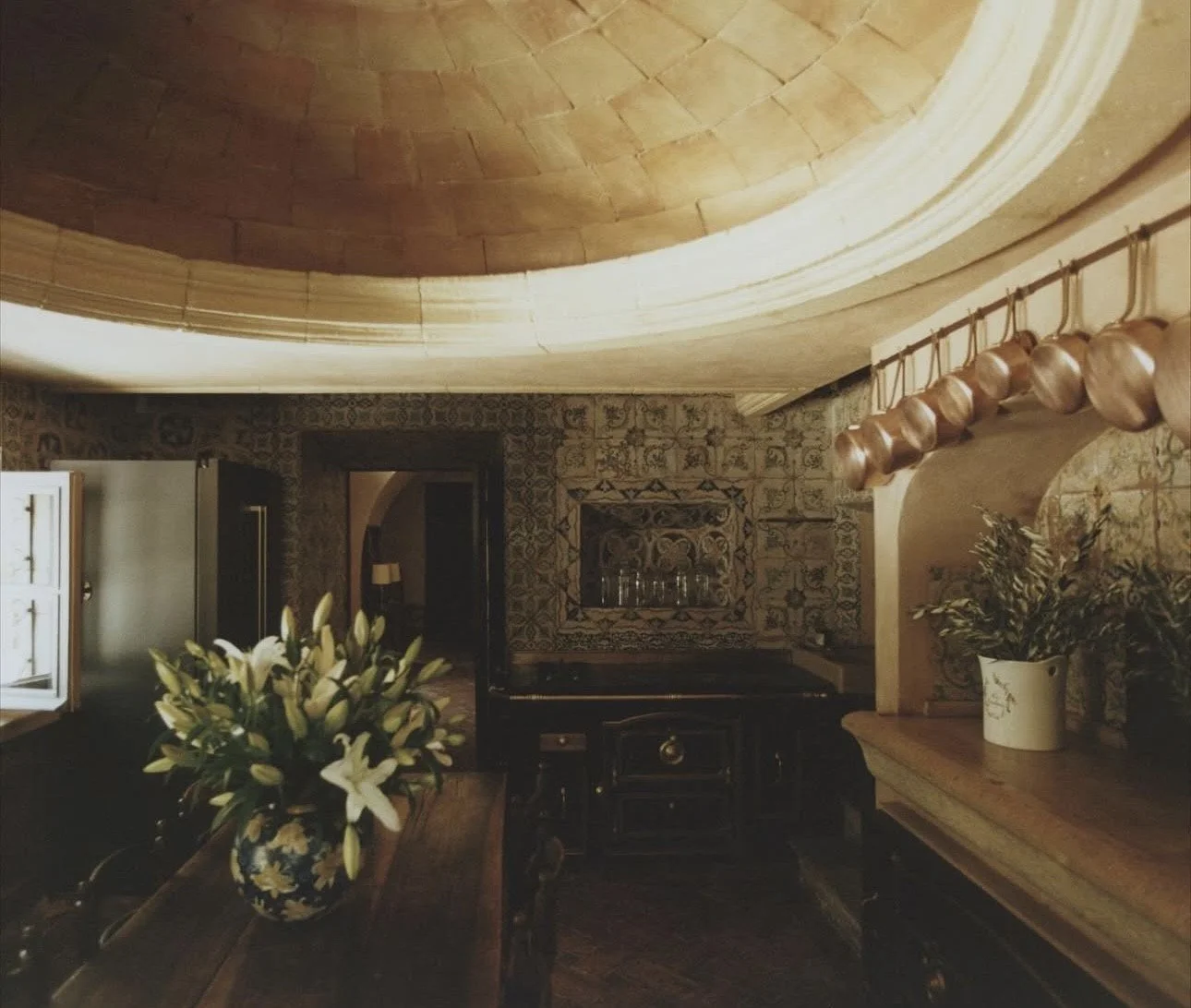
The presence of two kitchens in the house reflects the importance that Emanuel placed on food and coming together. The smaller ‘winter’ kitchen features a wood fired oven, Tuscan tiles, an antique La Cornue range and a vaulted ceiling that was actually a historic terracotta oven that was carefully recovered and placed atop the room. “Meals were important to my dad,” says Cosima. “He let guests do their own thing during the day but there were these big meals where everyone would gather and exchange ideas.” The guestlist for these meals were invariably eclectic: a dinner may feature the Franco-Chinese painter, Zaou Wou-ki sitting next to Daniela Morera, Interview magazine’s European editor and former Prime Minister of France, Dominique de Villepin talking about poetry, music and science. The couple hope to bring this same spirit of community into this new iteration of the house, collaborating with the Italo-Venezuelan chef, Bernardo Costantino (formerly of Atelier September in Copenhagen) to curate seasonal menus for meals that will be held in different locations throughout the estate: one night may take place under centuries-old chestnut trees, or beside olive groves, or the terraces overlooking the Luberon hills; lit by candlelight and served on textiles and tableware collected by Cosima’s mother, Laura on their family’s travels over the years.
Despite the deep reverence for the past displayed throughout the house, Emanuel was also remarkably modern for the times – going so far as to install underfloor heating and integrate a Bose sound system into the rooms. When the couple took over, they added comforts like new bedding, air conditioning and Wifi, a naturally filtrated 25-meter-long swimming pool and sought to make the property as sustainable as possible. “We are stewards of this place,” says Austin. “We wanted to transform the place into something where people can feel a sense of growth, refuge and to feel anew.”
Nowhere is this more evident that in La Bergerie –a 3000 square foot former 17th-century shepherds’ house and its original 12th-century water reservoir on the estate that the couple have almost completely remade from the ground up to into a four-bedroom residence complete with a freshwater pool. The couple privileged sustainable materials in the building – using reclaimed stone from the estate, hemp-and-sand-finished walls and natural clay floors as well as antiques from Emanuel’s trove such as a Chinese black and gold lacquered wall used in one of the bedrooms. They drew inspiration from nature, going so far as to create pigment inspired by their surrounding terroir – one particularly rich, almost burnt umber colour was taken from a piece of wood in a creek that had been weathered by decades of water damage. Paying homage to Emanuel’s passion for music, the couple enlisted the acoustic architect, John Storyk to convert the living room into a state-of-the-art sound space for listening and recording. The wabi-sabi modernity of their approach provides contrast to the history-filled Commanderie, or as Cosima puts it, “It was imagining a design response to what he built – a yin to the yang.” It was also the first project that the couple had done almost completely for themselves. “This project grew with us and it became an element of freedom for our own creativity,” says Austin, “It liberated us from the past.”
When the couple talk about what they hope to achieve with the transformation of La Cavalerie – a word that comes up again and again is regeneration. Take for example the fifteen hectares of olive orchard that has supplied select bottles of olive oil to friends and family for the last 20 years. Says Cosima, “My father said that you can either grow wine or olive oil and he said, “I love wine so much I couldn’t produce a bad one.” When the couple took over the estate in 2019, they planted more olive trees (bringing the total today to around 4000) and in 2022, they launched La Cavalerie olive oil – a vibrant, fruity extra virgin olive oil with a peppery finish – that has gone on to win a number of awards, becoming a firm favourite of restaurants such as 19 Saint Roch and Le Doyenne in France and beloved by chefs like Laila Gohar and Ignacio Mattos.
And they are not stopping there. Next year will see them entering the wellness space with the opening of La Source, an open-air spa with a sauna and cold plunge drawn from a natural spring onsite; and also the relaunch of Emanuel’s personal fragrance, Ombre de la Nuit. Concocted by the expert nose of famed perfumer, Jacques Polge in 1993, the musky woody fragrance – a heady blend of sandalwood, jasmine, patchouli and cistus labdanum – was too expensive to produce commercially during Emanuel’s time but the couple have teamed up with cosmetics producer, Ingo Metzler to launch the perfume along with a body oil in 2026. For Cosima who grew up surrounded by the world of beauty created by her father, these projects are a way of transmitting them to the wider world. “He didn’t realize the power of his legacy in a way,” says Cosima. “For us, it’s about respecting the past but also building harmony with the future.”