Family Style: Make Yourself at Home
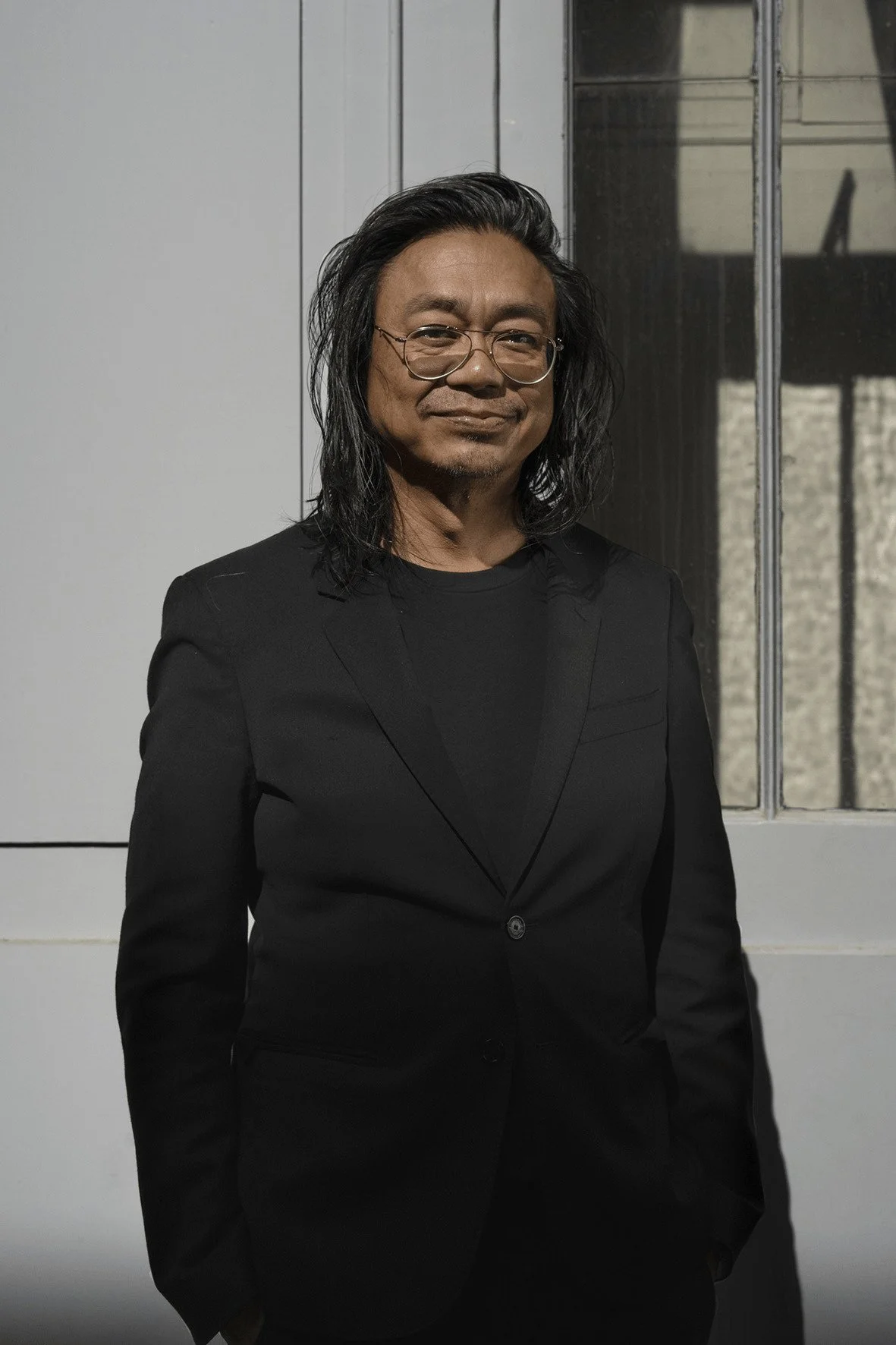
In a new Milan retrospective, Rirkrit Tiravanija blurs the lines between viewership and experience.
In the winter of 1996, Rirkrit Tiravanija built a condensed plywood replica of his East Village flat at the Kölnischer Kunstverein museum in Cologne. Titled Untitled: 1996 (Tomorrow Is Another Day), 1996, the Thai artist’s installation came fully equipped with running water and a working stove and was open to visitors six days a week for a duration of six weeks. There, visitors would come to cook, nap, congregate. (There was a distinctly grittier atmosphere when Tiravanija recreated it in 1999 at his friend Gavin Brown’s New York gallery in Chelsea, where visitors were found drinking, fighting, and even having sex.) For the artist, this was one of the first instances of breaching private and public barriers with unpredictable results. He adds, “It was also about giving space and time to people to have a real experience with art.”
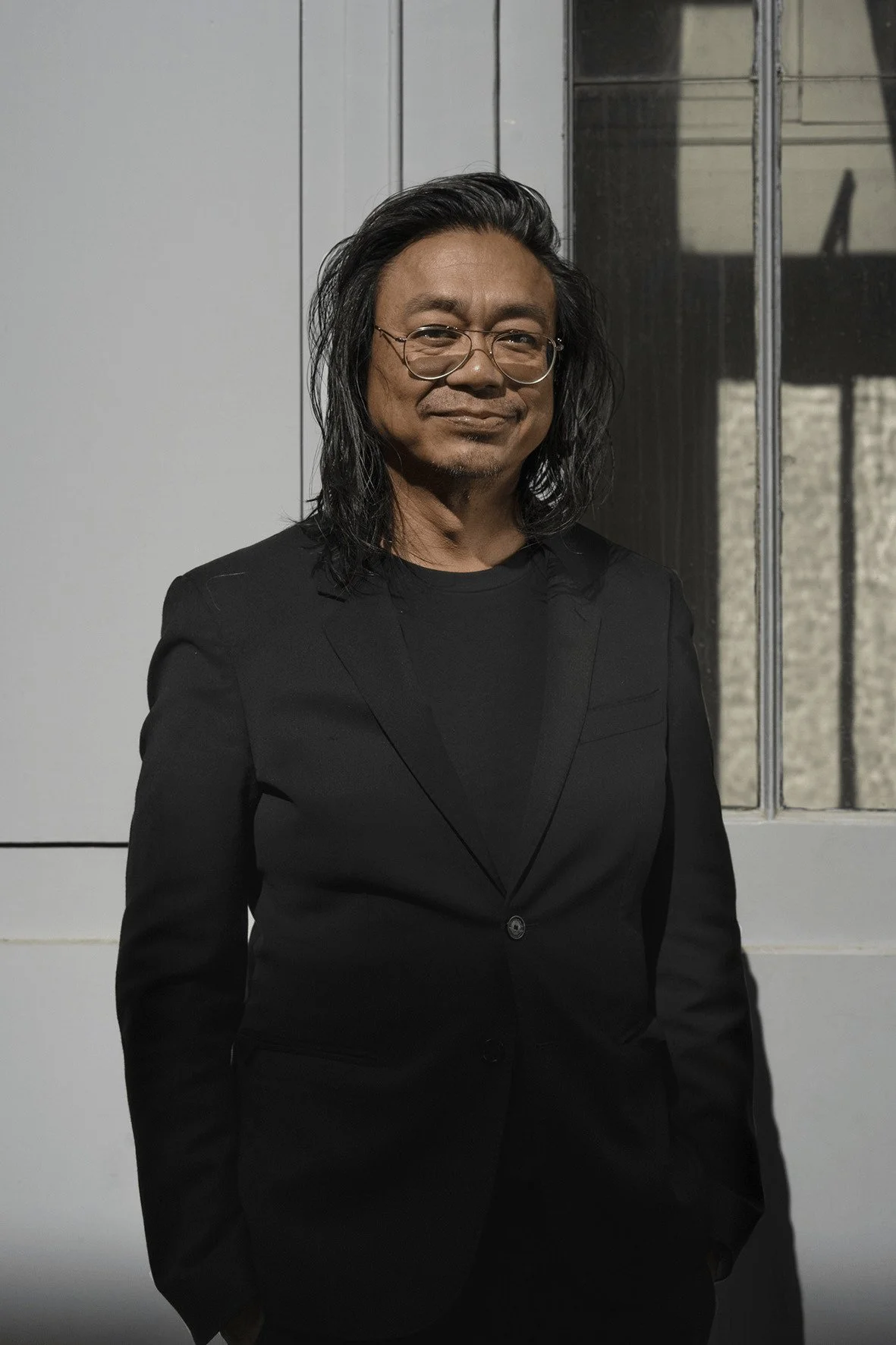
Thirty years later, while his East Village apartment does not feature in his new retrospective, “The House That Jack Built,” at Pirelli HangarBicocca—a contemporary art gallery housed in a former factory complex on the outskirts of Milan—in many ways his practice is still animated by the same spirit of imagining new possibilities for human connection. Titled after the famous 18th century English nursery rhyme, the show is a comprehensive survey of the architectural elements of Tiravanija’s oeuvre, complete with replicas of iconic buildings by modernist masters such as Le Corbusier, Carlo Scarpa, Jean Prouvé, Philip Johnson, and Rudolf Schindler.
Enclosed in a maze of orange fabric that echoes the color of Buddhist monks’ attire, the exhibition unfolds like a series of vignettes built to walk through and explore. It starts with a wooden spiral that echoes a stage created in 1924 by the Austrian-American architect Frederick Kiesler, and it ends with a recreation of Tiravanija’s home in Chiang Mai, Thailand that’s decorated with art by friends such as Jakob Kolding and Tobias Rehberger. This show came together remarkably easily, despite being less than three years on from his acclaimed retrospective at MoMA PS1, “A Lot of People” (which later moved to Arles, France), and Tiravanija having previously expressed scepticism in the concept of retrospectives. He recalls an early meeting with curators Vicente Todolí and Lucia Aspesi in which the two started pulling out all these buildings he had done in the past. “I said, ‘That’s exactly the show I was thinking about,’ he tells me. “I wanted to explore this idea of domesticity, shelter, and this idea of an everyday home.”
Born in 1961 in Buenos Aires to a diplomat father and oral surgeon mother.” Tiravanija grew up in Thailand, Ethiopia, and Canada, where he initially studied photojournalism at the Ontario College of Art. “I wanted to be a foreign journalist because I was exposed to Life magazine and National Geographic, but it was kind of an alibi to becoming an artist,” he says. “Coming from the far east in the late ’70s, I didn’t even know that one could become an artist.” His Damascene conversion to art came in an art history class during his undergrad studies, where he was shown slides of Kazimir Malevich’s Suprematist Composition: on White, 1918, and Marcel Duchamp’s Fountain, 1917. The pieces opened up a world of possibilities. “I realized that if that’s art, then there’s no limit,” he recalls. “I had this idea of taking Duchamp’s urinal, putting it back on the wall, and pissing into it. The point was that by actually using it, it would reactivate it.” After graduating he moved to the states to get his M.F.A. at the School of the Art Institute of Chicago before moving to New York in the mid-’80s for the Whitney Museum of American Art Independent Study Program.
He would further explore Duchamp’s notions in the ’90s when he became part of a loose cohort of artists that included Carsten Höller, Philippe Parreno, and Gillian Wearing working under the banner of relational aesthetics; coined by curator Nicolas Bourriaud, the term privileged installation- and performance-based conceptual work that turned spectators into participants. One of his most famous works from this period is Untitled 1990 (Pad Thai) in which he cooked and served noodles in the back room of Paula Allen Gallery. This sharing of meals with strangers in unusual venues has been a consistent theme for Tiravanija in his career. “Cooking for me is an instinct, not a learned thing. That’s how I approach making art,” he says. “Cooking, making work, and teaching are all just living.” At the time, doing so in a white-cube setting was a way of pushing the boundaries of what a gallery could do, as well as rejecting traditional Western notions of capitalism. “How the West comprehends knowledge is through having objects and collecting them to be able to understand what they are,” he says. “I'm trying to destroy that idea.”
In the past, Tiravanija has made explicitly political work, such as A Million Rabbit Holes, 2024, reflecting the events leading up to Trump’s election in November 2024 and “Demonstration Drawings,” 2008, where he commissioned fellow Thai artists to reproduce images of street clashes in Thailand, anti-Iraq War marches lifted from the International Herald Tribune. The political element is less immediate in the new Milan exhibition but still present. A framed print that reads “Less Oil More Courage” hangs in the final installation, for instance. “When you let people run wild and give them space to act, it's always political,” he says. Though he still teaches art at Columbia University, he’s perturbed by what he sees as the turbulence wrought by the current U.S. administration. “I’m finding myself less comfortable in thinking of going back to the U.S. than I am sitting in Chiang Mai,” he shares. But he remains hopeful that by building community and encouraging participation: “We can think about small acts of resistance and going forward.”
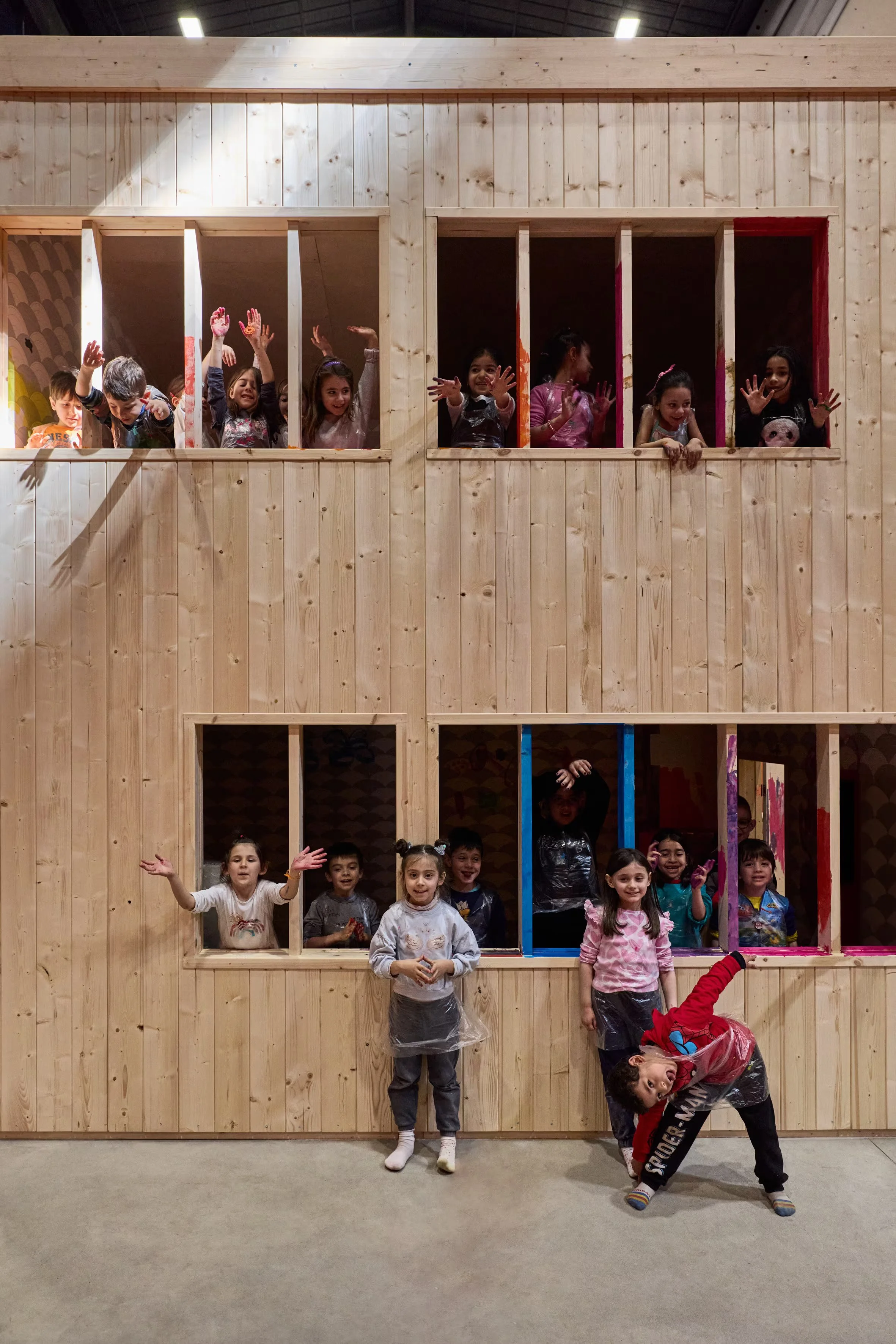
Nowadays, he’s increasingly spending more time between Berlin and Thailand. The latter has been a part of an ongoing project he began in 1998 with the artist Kamin Lertchaiprasert when the two bought a plot of land outside the village of Sanpatong, near Chiang Mai, with the idea of establishing a self-sustaining collective where artists and locals could live and work, grow rice, and generate their own electric power and gas for cooking. “We don’t have an expectation or an agenda,” says Tiravanija. “We want it to be an open space to cultivate ideas of social engagement.”
Installation view of "Rirkrit Tiravanija: The House that Jack Built." Photography by Agostino Osio. Image courtesy of the artist and Pirelli HangarBicocca.
At the Milanese gallery, the cavernous surroundings are inaugurated with visitors partaking in a variety of activities: everything from origami classes, completing jigsaw puzzles, playing foosball, and watching a band perform. Nearby kids play in a half-scale recreation of a modernist family home. Tiravanija surveys the crowds approvingly. “That’s my idea of utopia… chaos,” he says with a nod. “My show should never have an opening; it should only have a closing,” he adds. “In many ways this is the beginning—I am setting up a table and people will come and make something of it.”
“Rirkrit Tiravanija: The House that Jack Built” is on view through July 26, 2026 at Pirelli HangarBicocca at Via Chiese, 2, 20126 Milano MI, Italy.